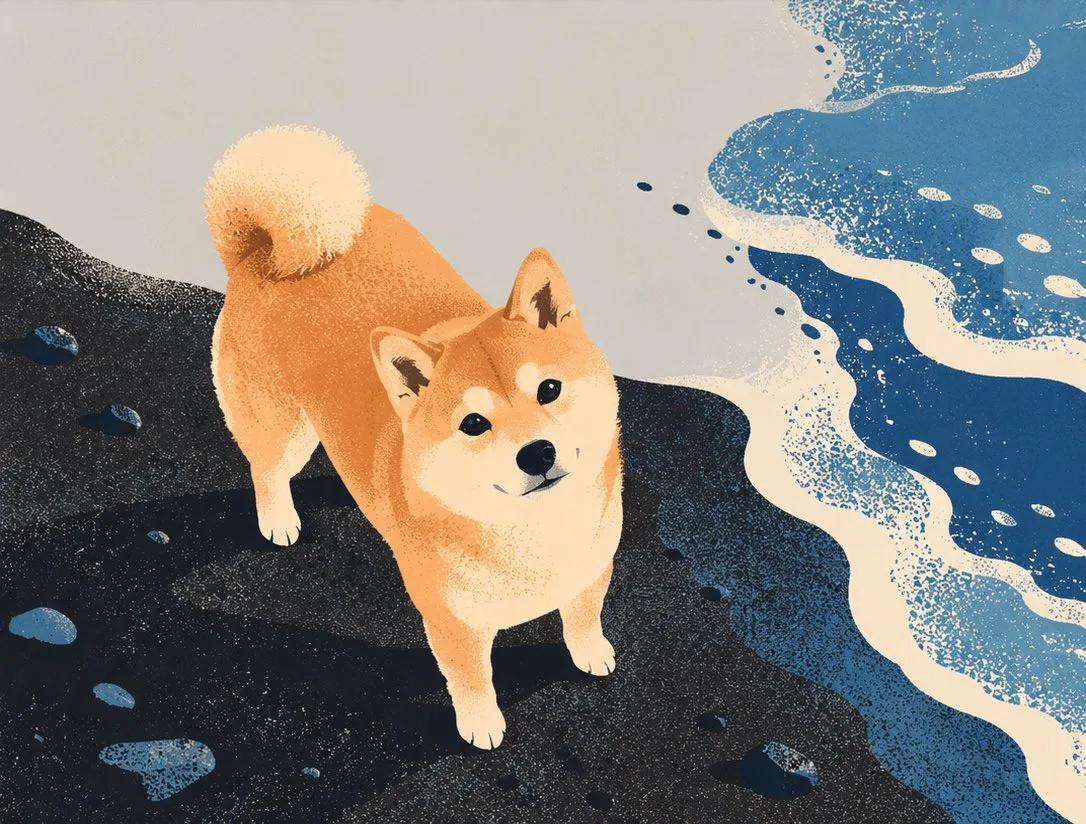
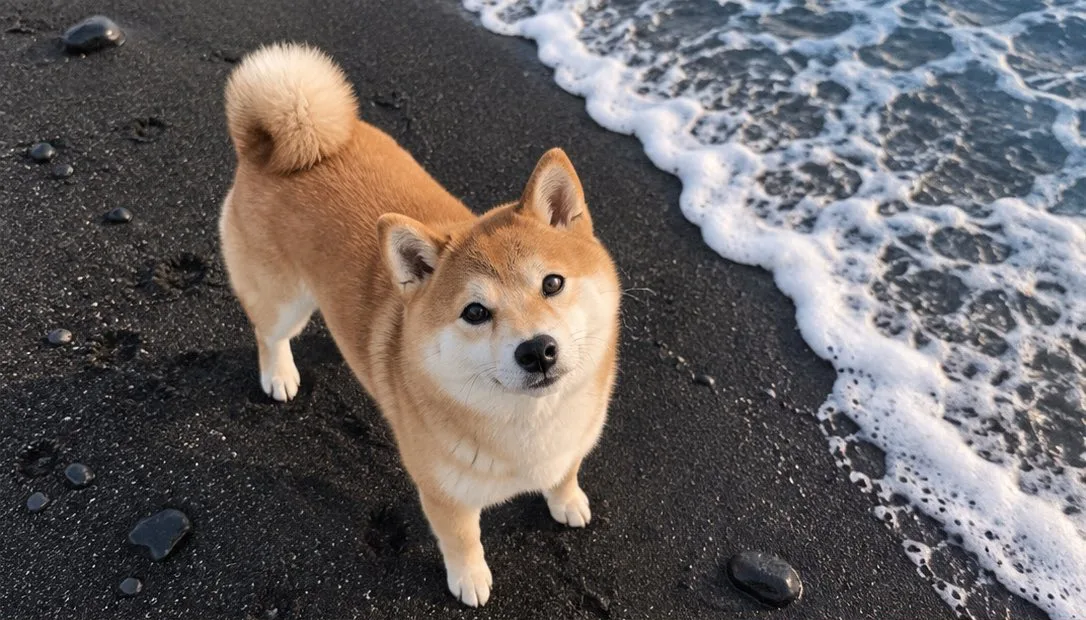
Photo to Japanese Flat Poster
Turn a person or pet photo into a Japanese-style flat illustration poster with screen-print grain, an overhead viewpoint, and generous negative space, while keeping the subject recognizable.
Design a vertically stacked diptych in a 3:4 portrait composition. The upper half shows the subject from the user's uploaded original image, prioritizing people, cats, dogs, and other animal subjects. Preserve the subject's recognizable real features as much as possible: for a person, face shape, facial features, hairstyle, hair color, skin tone, and the main clothing features and colors; for an animal, face shape, ears, fur color, markings, body shape, and expression. Buildings, streets, and complex spatial surroundings in the background are not the subject; soften and simplify them so that the upper half clearly presents the original image's subject. In the lower half, redesign the same subject as a Ryo Takemasa-style cartoon illustration, incorporating a screen-print aesthetic, grainy texture, a bird's-eye overhead view, a rule-of-thirds composition, and abundant negative space. Retain the design language of the original prompt, but adapt its black-sand beach poster theme into an illustration reinterpretation of the person or animal in the uploaded image. The upper third of the illustration can retain a large light-gray area of negative space, creating breathing room and an attractive layout; use a purely flat illustration to depict the subject and its simplified setting in the middle area. Give the overall composition an overhead, bird's-eye observation quality for an interesting visual angle. Color relationships can draw on the original prompt's light gray, black, and blue, as well as lively combinations of vibrant dopamine colors, but no longer emphasize the specific travel-poster subject of Iceland's Vik black-sand beach. Instead, translate that visual language of coastlines, negative space, flat composition, and grainy texture onto the uploaded subject. Do not use outlines or any lines. Use pure flat illustration, prominent grain, and strong flat color fills, with an ultra-high-definition finish and an 8K-quality feel, and the refined visual order of an illustration poster. If the uploaded subject is a person, place them in a simplified flat scene; if it is an animal, make the animal the main visual focus and use a minimal surrounding environment to support it. The lower half should focus on an artistic poster reconstruction of the same subject, using Ryo Takemasa's cartoon quality, screen-print grain, overhead composition with negative space, and a flat visual language, rather than reproducing the real scene. Establish a clear connection between the upper and lower halves so viewers can see that the lower half is an illustration reinterpretation of the same subject shown above. Do not include any text, letters, numbers, logos, brand marks, watermarks, signatures, or copyright information. Do not lay out any title, subtitle, or copyright information.
About this prompt
- What you need
- Requires one photo containing a person, cat, dog, or another animal. Attach it in your image generation tool before sending the prompt.
- How to use
- Choose the subject focus and palette, or keep the source defaults.
- Copy the complete prompt or open it in ChatGPT.
- Attach your photo and send. The prompt requests a 3:4 portrait diptych, with the original subject above and its flat illustration below.
- Example images
- Two photo-to-illustration comparisons from the author: a Shiba Inu and a coastal portrait. Drag the divider to compare each pair. The source uses the GPT Image hashtag without specifying a version. These source-reported examples have not been reproduced by Image Prompt Book.
- What we changed
- Complete English translation and adjustable subject and palette options by Image Prompt Book. The original 3:4 stacked composition remains in the prompt; the source images are split into photo and illustration frames for the requested comparison viewer. These adaptations are not endorsed by the author.
- License
- The author did not state a license. All rights remain with the author; this page provides credit and links to the source.
- Sources
- DAAI on X — complete prompt (2026-09-27) · Original · DAAI · checked 2026-10-02
- DAAI on X — photo and illustration examples (2026-09-27) · Supplementary · DAAI · checked 2026-10-02
Use with your own image. After copying or opening ChatGPT, attach one photo or character image, then send.